Dogfish Head 120 Minute IPA Clone
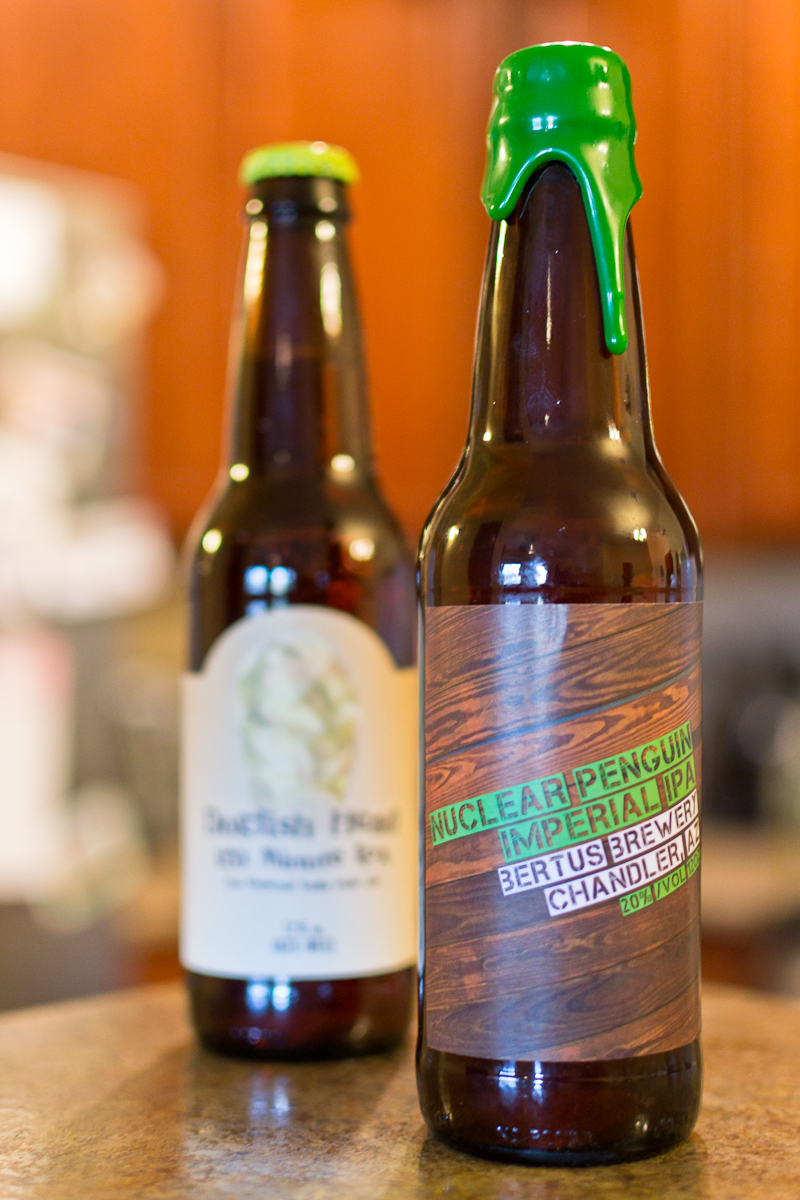
After this post discussing my plan to brew a cross between 120 Minute and Pliny the Younger, I got some feedback that I should post the recipe and process for the original 120 Minute clone. Most of the info is detailed here, but that thread is a million pages long and the information isn’t condensed. Unfortunately, there’s a flipping ton of information about this beer, so hold onto your hats, this is going to be a long one.
My 120 Minute adventure started with the Brewing Network’s Can You Brew It show for 120 Minute. The challenge of brewing a 21% ABV beer really intrigued me, which was compounded by the fact that I had a hard time finding anyone that had truly cloned the beer. The CYBI show was focused around Sean Paxton’s attempt at the beer. While he got really close, his beer didn’t attenuate, and stalled at 1.050; way too sweet for my taste.
So I used Paxton’s recipe as the foundation to build off of. Obviously he had the flavor profile right, but there were definitely some tweaks needed. First and foremost, his base malt, Pilsner. I’m positive Dogfish uses American 2-row. Next on the list is the yeast. Dogfish uses an fairly clean, fairly attenuative english yeast. I’ve had success using WLP007 in cloning 90 minute, so I used it for the 120 minute recipe as well. The next issue were yeast pitching rates. This beer needs a ton of yeast to ferment out, so I planned on making much larger starters. The final issue were hopping rates. I tripled what Paxton used. A number of folks have had success brewing this on HomeBrewTalk, so it’s a fairly proven recipe. So with the stage set, I’ll get straight to the recipe and process.
Brew Day
6 Gallons
Target OG (pre-sugar): 1.100 or so
17lbs 2-row
1.25lbs Thomas Fawcett Amber Malt* (see note below)
5oz Amarillo
4oz Simcoe
3oz Warrior
Mix all hops together, and hop continuously for 120min** (see note below)
Mash at 147-149* for 90min
120min boil
10lbs dextrose added slowly once the WLP099 is added*** (see note below)
*Amber malt: Use Thomas Fawcett Amber Malt. If you can’t find Thomas Fawcett Amber, look harder. This is the exact malt DFH uses, you can see the bag on BrewMasters. It’s available at quite a few online retailers if your LHBS doesn’t carry it. For my clone, I subbed 1lb Victory and 4oz Crystal 60. The difference is minimal, but do it right if you can.
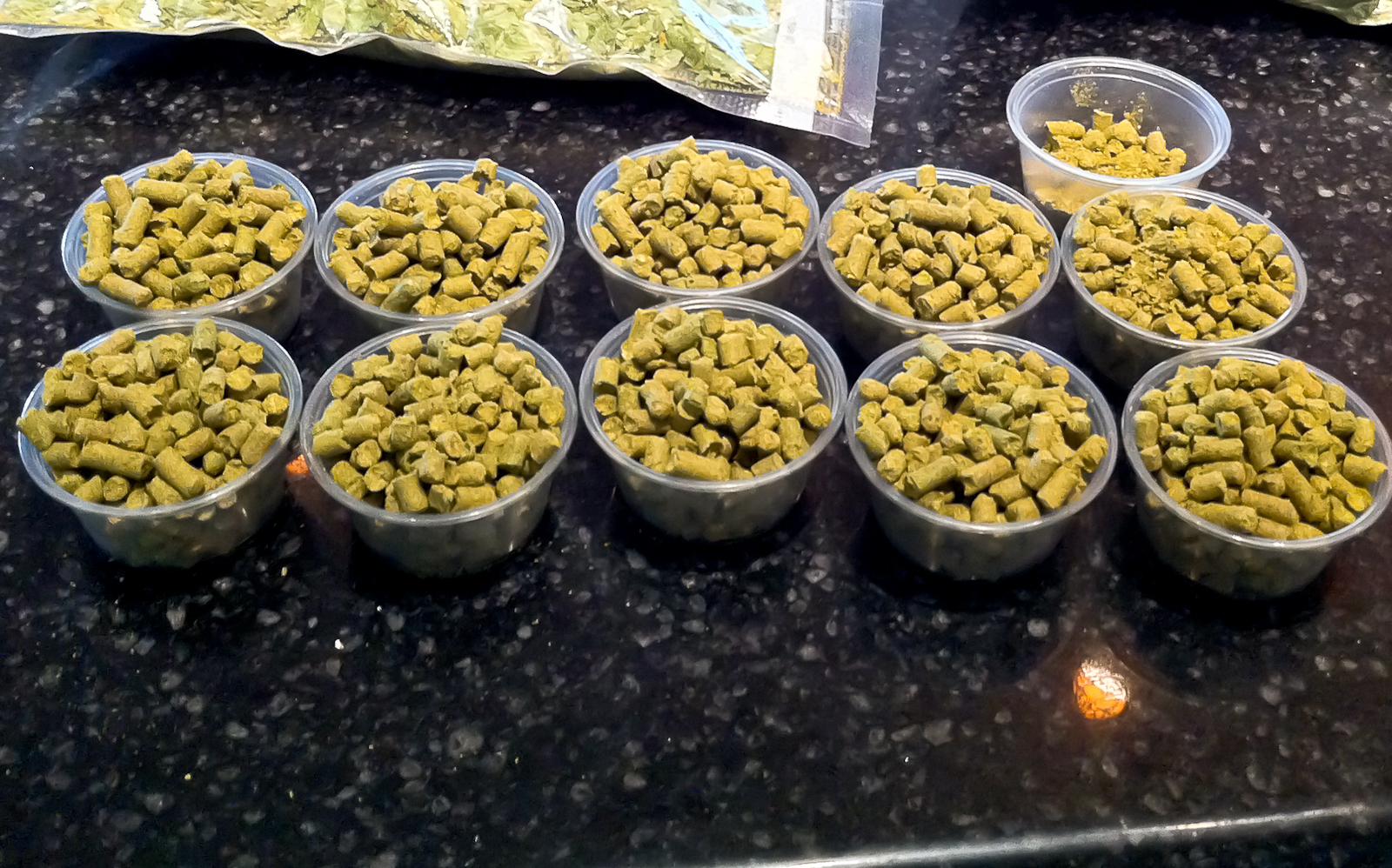 **Hopping: Mix all 12oz of hops together, how often you add them is up to you. Some people add a couple pellets every minute, others fill up 40 dixie cups, and add one cup per 3 minutes. I’m way too lazy for that crap. I divided my hops in 13 additions (26g each), and added them every 10 minutes. Realistically, you could add the hops every 20 minutes.
Fermentation
The week before you brew this, you need to start thinking about your yeast. This is by far the most important step in this beer. You need a metric asston of healthy yeast. Without that, you’ll have hop-flavored cough syrup. This beer uses two strains of yeast: WLP007, then WLP099 gets pitched a few days after the WLP007. Both strains will need massive starters, so plan on stepping both up.
-WLP007 – Plan on growing about 500 billion cells. This requires a 4-5 liter starter on a stir plate.
-WLP099 – Plan on about the same. I did a 4 liter starter.
Pitch the WLP007 at around 64*, and hold fermentation there for the first couple days. As the fermentation slows, raise the temperature to around 66-67*, and pitch the slug of WLP099 yeast. At this point you want to start your dextrose additions.
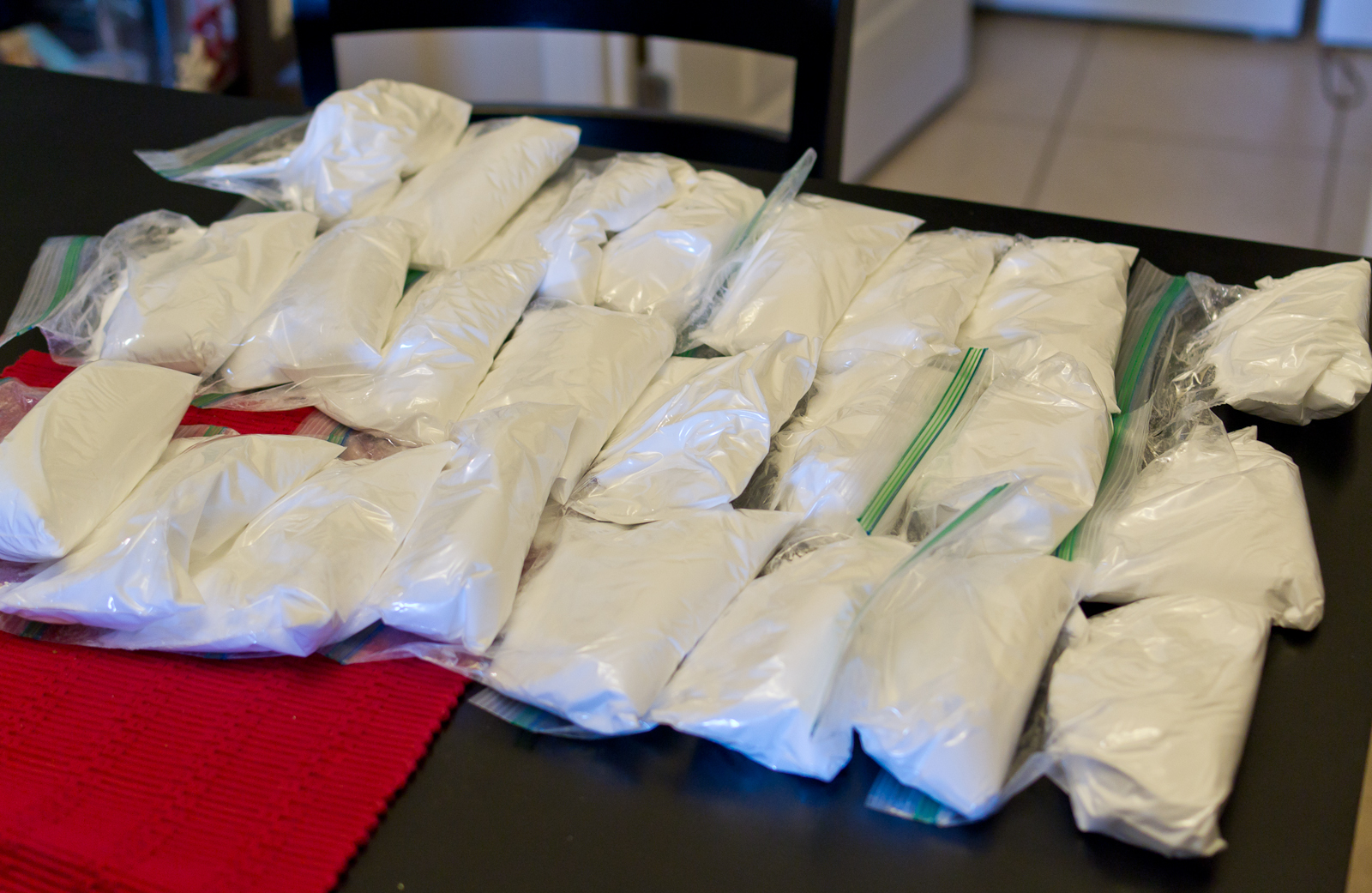 ***Dextrose: A massive portion of the fermentable sugar in this beer comes from dextrose. Divide 10 pounds of the white stuff into ziplock bags. I’d divide half in 12oz bags, and half in 6oz bags. Start feeding the beer twice a day, 12oz of dextrose per addition. Take a gravity reading at every addition to see how the how the beer is fermenting. As fermentation slows, cut the additions back to 6oz each. The goal is to get as much sugar into the batch as possible, while keeping the FG of the beer around 1.020 or lower.
Once you’ve added all the sugar you dare, keep the beer warm (68* or so) to help it finish attenuate. When the beer has truly reached FG, you’ll want to get it off the yeast cake fairly quickly. Autolysis is rarely an issue in home brewing, but in a 20% beer, it certainly is. Plan to rake the beer to secondary about a week after you hit FG. Marvel at the size of the yeast cake; you’ll never see a yeast cake so big in a six gallon batch.
Secondary
You’ve just brewed an 18-21% ABV beer; that’s 36 to 42 proof. It’s going to need some time to mellow out. Two months is probably a good length of time before you’ll want to consider kegging it (approx three months from brew day.)
We’re going to heavily dry hop this beer in the secondary. I used 6oz of hops. 1oz of Simcoe and 1oz of Amarillo added three times over three weeks. Think of the dry hop schedule in reverse: Four weeks from when you plan to keg the beer, start dry hopping.
Keg It
You can’t bottle condition this beer. If you bottle it, it will be flat. Force carbonation will be the only way to get some bubbles. I let my beer cold condition in the keg for 4 weeks before I bottled it off for some long term aging.
 Wrap Up
The two most critical steps to clone this beer are: Mash temp, and healthy yeast. Mash low to ensure the yeast can ferment the wort, and pitch a metric fucking asston(technical brewer’s term) of yeast. If you get those two things right, your beer will turn out great.
That’s going to wrap it up for this post. I’ll follow this up with another post in a few days regarding some of the tips and tricks I learned brewing this beer. There are a bunch of details to get into, so stay tuned.
I noticed your from AZ, what part are you from? I am a homebrewer from Tempe going to ASU
On the boarder of Chandler and Tempe. Drop me an email at scottland@gmail.com if you ever want to brew.
Hi Scott,
First, many thanks for your detailed posts of the various brews. They are a treasure trove of info. I read through the detailed thread (all 50 some pages!) on Homebrewtalk regarding your brew of the DFH 120 and, prior to when I try brewing up my version of this batch here in July, I have a couple questions regarding the starters you made.
For your initial starter with 007, you started with 800ml and then “bumped” up to 6L. Did you keep the gravity of the initial 800ml and subsequent 6L at around 1.040 or did you do something else (especially for the 6L starter)? I’ve always kept my starters around 1.040 since that’s the best way to grow yeast and not stress them out but wanted to see if you did something different.
Same goes with the starter for 099. When you stepped it up to the larger starter size, what gravity was that second (and first one for that matter) starter? I read you cold crashed it, etc but couldn’t find where you mentioned the gravities of the starters.
So, the way I read it, you pitched the first starter and took gravities until the gravity was down in the 20s (a few days), then pitched the decanted, fermented out 099 starter, and then began the sugar additions?
Thanks very much for the clarifications and for all the great info.
Don
Scott, forgot to mention. If you want, just drop me an email at dpoletsk@gmail.com if you don't want to clog up the space for comments with your response to my earlier questions. Thanks again.
-Thank You
-Both starters were around 1.040. I use 10ml of water per 1 gram of DME (100g = 1 liter)
-Both starters were cold crashed and decanted, so that I didn't dilute the wort too much.
-I let the 007 work until it dropped into the 20s, and then pitched the 099. You had it exactly correct.
Great blog man, loving it. I know this post is a bit old but I was just curious how this beer tasted after a while? Also, if you had any further tips you could think of. I am attempting this with your recipe tomorrow, we'll see how it goes! Looks amazing
Thanks! Ya, I still have like 14-15 bottles of it. It has a little over 2 years of ago on it at this point, and it still tastes great. The alcohol note has smoothed out a lot, and the overall flavor is sweet oranges. Kind of like orange marmalade.
There's definitely some oxidation, but I suppose there's no getting around that with a 2 year old 'IPA'.
As for as tips go. I would back the sugar down, with the goal of having the beer finish around 15-16%. I feel it would drink much better at that alcohol %. 21% was a bit excessive.
I'd also probably dry hop in a CO2 purged keg to fight off some of the oxidation as much as I could.
Hey Scott,
I brewed up another tester of this beer and was shooting for 18.5% ABV, my yeast apparently were very healthy and very hungry and the last i checked the gravit was down to 1.010 which was the weekend and as of yesterday I was still seeing the occasional bubble. Do you think I should back sweeten it to boost the FG or just let it go? I emailed Dogfish yesterday to ask their FG/Plato target # but i havent heard back from them yet.
How big of a fermenter do you need to pull this off? If you've got 6 gallons of wort + 2x 4L starters (decanted) + 10lbs of sugar, seems you'd overflow a standard bucket. I only have 6 gallon Better Bottles so I'm trying to gauge how much I need to scale the recipe down to make it fit.
How would you get the WLP099 to stop? I understand the idea of backing the sugar down but if the yeast are still healthy and hungry when you stop sugar additions and there are still ~20 points left wouldn't it just eat that? Is there a problem letting this finish <1.010?
I only took about 5.5gal of wort into the fermenter (leaving behind the trub). So it was a little tight with a 6.5gal fermenter, but it worked well.
Keep in mind I decant the starters.
I forgot to say thanks! You're right, it ended up a bit over a gallon added by the time it finished fermenting. I did an 8 gallon batch (which was closer to 8 1/2) and split it between two fermenters. I needed to ad 18.475lbs of sugar before fermentation petered out, over 3 weeks later, below the 5.5 gallon mark on the fermenters (~11 gallons total). Tasting just a month in and without dry hopping I would drink this again, although I probably won't ever make it again. So much work every day!
Did you end up adding pure 02? If so, how often?
I would also like to know this,
Scott, Thanks for your helpful summary. I've read several reviews about 099 that state it's fussy about cold crashing and how it should be pitched at high krausen. Have you every had issues cold crashing 099 to decant when you've worked with it?
I've stepped up a 2L starter to 5L and would prefer to crash and decant.
I know this is an old thread but hoping for some insight. I brewed this nearly to a tee, only problem is i finished up at about 1.002 Final gravity. OG was 1.07. Added 10 lbs of dextrose and it alll got eaten up. There is no sourness to it and it tastes like chemical boozieness. Will it “clean” up? Is it def infected? do i let it bulk age in secondary for a year? Thanks!
Awesome receipe. Thanks
I did modification, my OG target was 1.095 and made 2.4 l starter with wlp 007 and within 3 days beer fg was 1.020
Started 2.5 l starter of wlp099 and added sugar for 7 days. Currently FG is 1.018 and it’s still fermenting.
Current abv is 22%
Not sure how fast I have to rack this beer and start dry hopping?
Beer looks hazy
How many gallons of wort did you begin with before the 120 minutes boil? I understand that you had 6 gallons to ferment.
To decant the starter, just pour out the clear fluid carefully. How many times did you refresh the starter? I have two 2L starters and plan to buy two yeast vials.
How do you measure or calculate the %ABV on the finished beer when you keep adding fermentables along the way? I just brewed a pliny the younger clone at 10.4 %ABV but I measured og and fg two days apart, yeast was serial repitched to generation 6. I would like to run this yeast again but I am unclear on how to measure ABV. One could assume 100% conversion of corn sugar? I was planning to mix corn sugar in boiling water, keg it hot, cool under CO2, set it on a scale, hook it to the conical racking port and open the racking valve to deliver fixed weight of sugar water a couple times a day and monitor a Tilt hydrometer real time.
Thanks,
Jason